Plan zones before buying equipment
A workable habitat separates essential functions without taking away movement space.
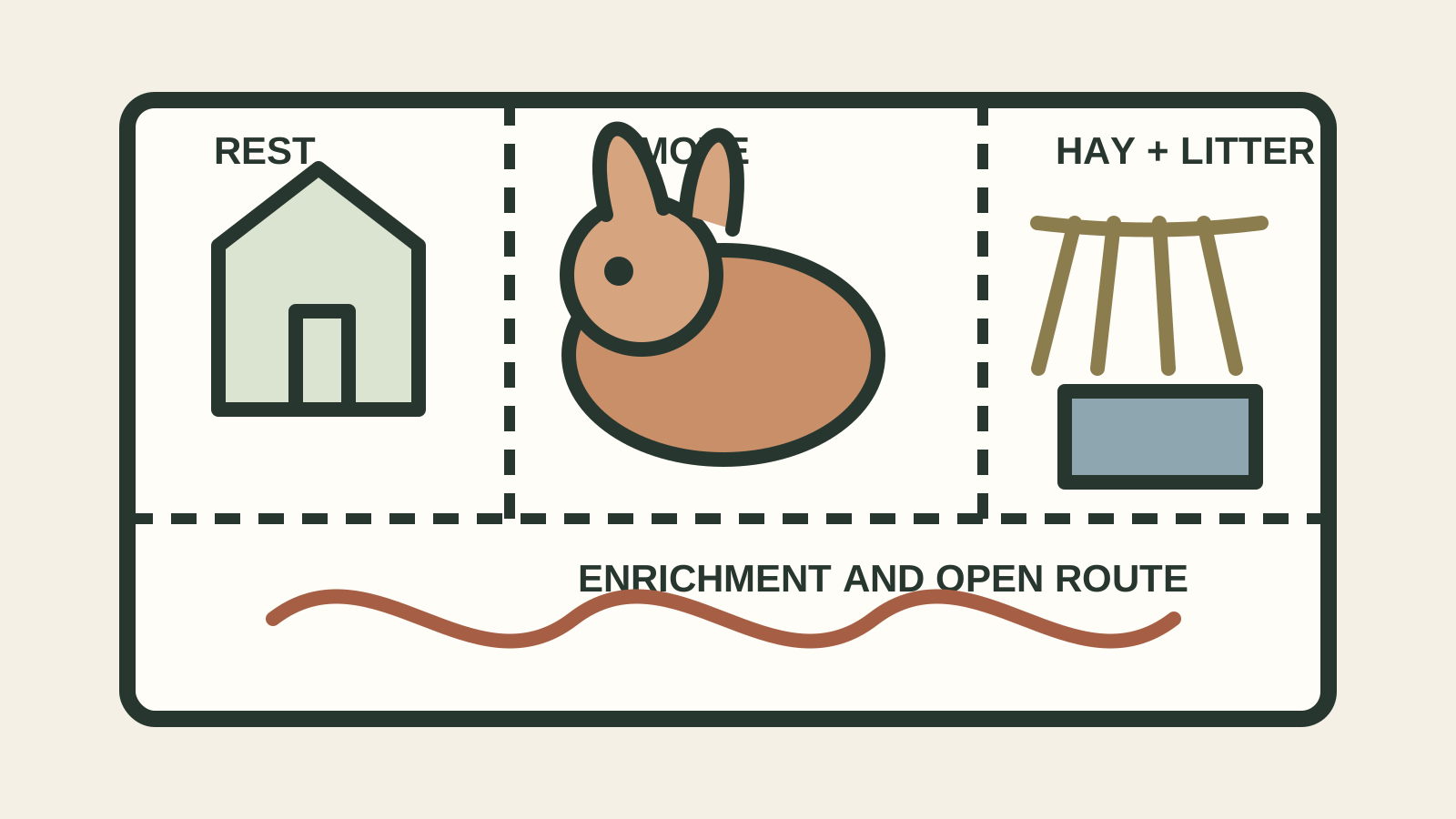
Measure the floor area you can dedicate continuously, not only the area offered during supervised play. Mark a quiet shelter zone, a hay and litter zone, an open movement lane, and more than one hiding option for a bonded pair. Keep food and water easy to inspect. The layout should let every rabbit stretch, stand, turn, hop, and move away from a companion. If the plan works only when furniture is moved temporarily, it is not yet a dependable daily habitat.
| Zone | Minimum function |
|---|---|
| Rest | Quiet shelter with a solid floor and more than one exit |
| Food and toilet | Fresh water, hay, and accessible litter area |
| Movement | Unbroken non-slip space for hopping, running, and stretching |
| Enrichment | Safe hiding, chewing, foraging, and digging choices |
Use solid, non-slip footing
Traction and cleanliness matter more than a polished appearance.
Avoid wire or mesh as the walking surface. Smooth tile, polished wood, and slick laminate can also be stressful when a rabbit cannot gain traction. Use a stable, cushioned top layer that does not bunch under movement, with a waterproof layer below where the household floor needs protection. Watch for chewing and loose threads, and replace damaged material. Flooring must be dry, cleanable, and wide enough that the rabbit is never forced onto an uncomfortable strip.
Rabbit-proof every reachable edge
An enclosure boundary does not remove hazards inside or immediately beside it.
Move electrical cords out of reach or cover them with a robust barrier. Remove toxic plants, medicines, cleaning products, small swallowable pieces, and access behind appliances or reclining furniture. Check pen gaps, doors, clips, and any place where a head or limb could be trapped. A dog or cat should not have unsupervised access, even when previous contact appeared calm. Recheck the space from floor level after every layout change.
Add shelter, foraging, digging, and companionship
A habitat is a behavioral environment, not only a containment boundary.
Provide hiding places with safe exits, hay-based foraging, chewable items made from rabbit-safe materials, and a digging option that can be inspected and cleaned. Keep the room ventilated and away from direct heat sources and drafts. Observe which zones the rabbits actually use, then adjust without crowding the movement path. Compatible rabbits need space to rest together and apart. Human attention is valuable, but it does not automatically replace rabbit companionship.
Questions owners ask
Is a cage enough for an indoor rabbit?
A small cage is not a complete living environment. Rabbits need dependable usable space for movement, separate functional zones, shelter, and enrichment every day.
What flooring works in a rabbit pen?
Choose a solid, non-slip, cleanable surface with enough cushioning and no loose edges. Monitor any fabric or mat for chewing and replace damaged material.
Where should the rabbit habitat be placed?
Use a calm, ventilated household area away from radiators, drafts, direct heat, electrical hazards, toxic plants, and unsupervised access by predator species.
How many hiding places are needed?
Provide at least one usable hiding choice per rabbit and an additional option when space allows, while preserving an open route for movement and escape.
Sources
We use published material to support individual claims. Access and review dates are recorded by our editorial process.
- Wire flooring, poor hygiene, and insufficient exercise can worsen rabbit foot problems. UC Davis School of Veterinary Medicine — Rabbit Care Accessed August 26, 2026 · Limit: General educational guidance; individual needs require veterinary advice.
- Reachable cables and unsafe plants must be removed or securely protected. RSPCA — Keeping Rabbits in Your Home Accessed August 26, 2026 · Limit: General educational guidance; individual needs require veterinary advice.
- A safe home base includes flooring, water, litter, hay, hiding, and enrichment functions. House Rabbit Society — Housing Rabbits Safely Accessed August 26, 2026 · Limit: Nonprofit practical guidance; dimensions should be adapted to the individual rabbits.
- Indoor rabbit flooring should be solid and non-slip, and mesh flooring should be avoided. RSPCA — Keeping Rabbits in Your Home Accessed August 26, 2026 · Limit: General educational guidance; individual needs require veterinary advice.
- Rabbit housing must provide continuous room for normal movement and separate functional areas. RSPCA — Creating a Good Home for Rabbits Accessed August 26, 2026 · Limit: RSPCA dimensions are welfare recommendations for two medium rabbits, not a universal legal standard.